A number for the year is not a plan.
We show you whether yours holds.
You name what you want to earn. Veritess breaks it into customers, leads, traffic and budget — then says plainly whether it closes on the numbers you have today.
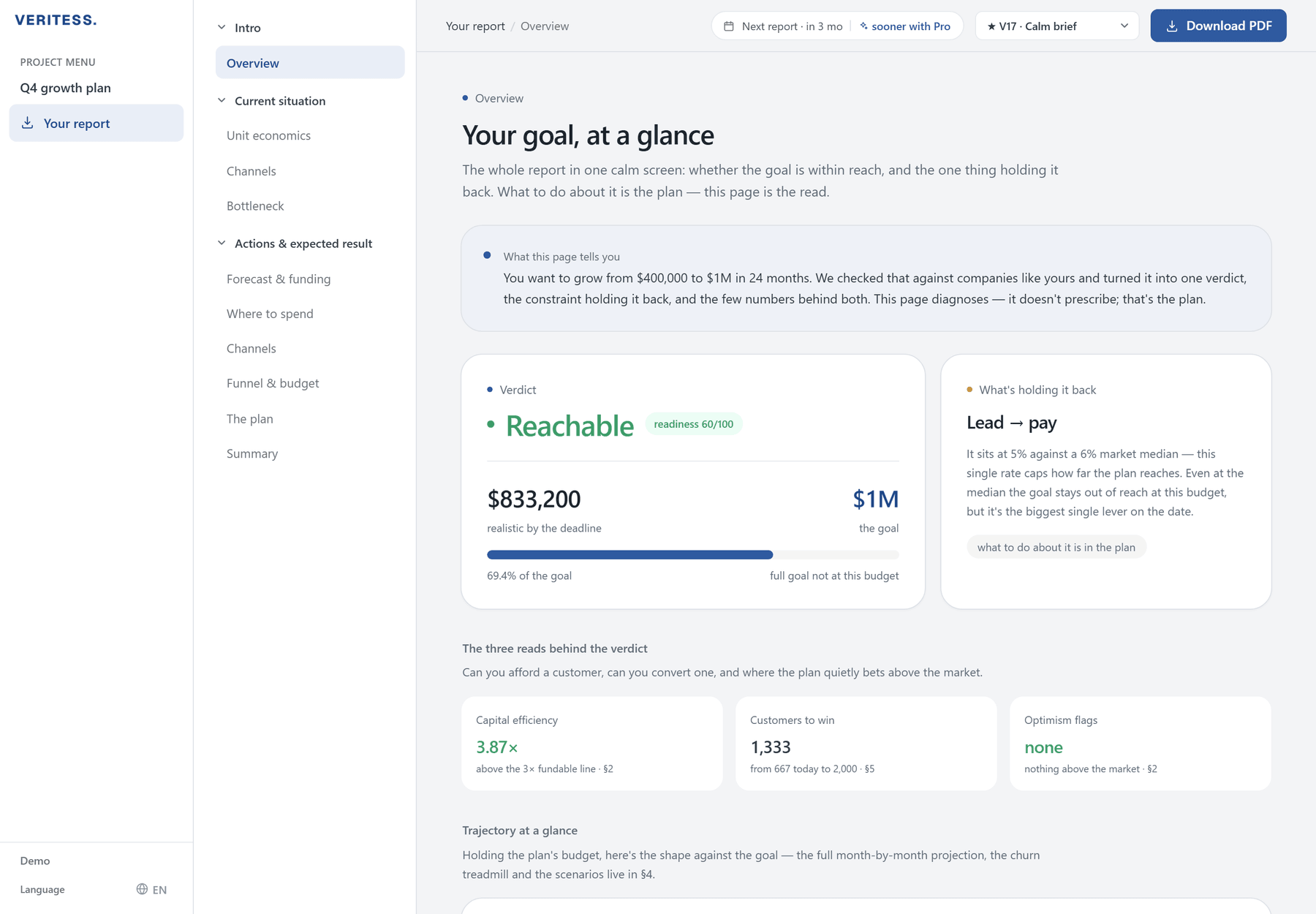
Not a dashboard. A report that finishes the argument.
Every screen opens with the conclusion and puts the numbers beside it as evidence — not the other way round.
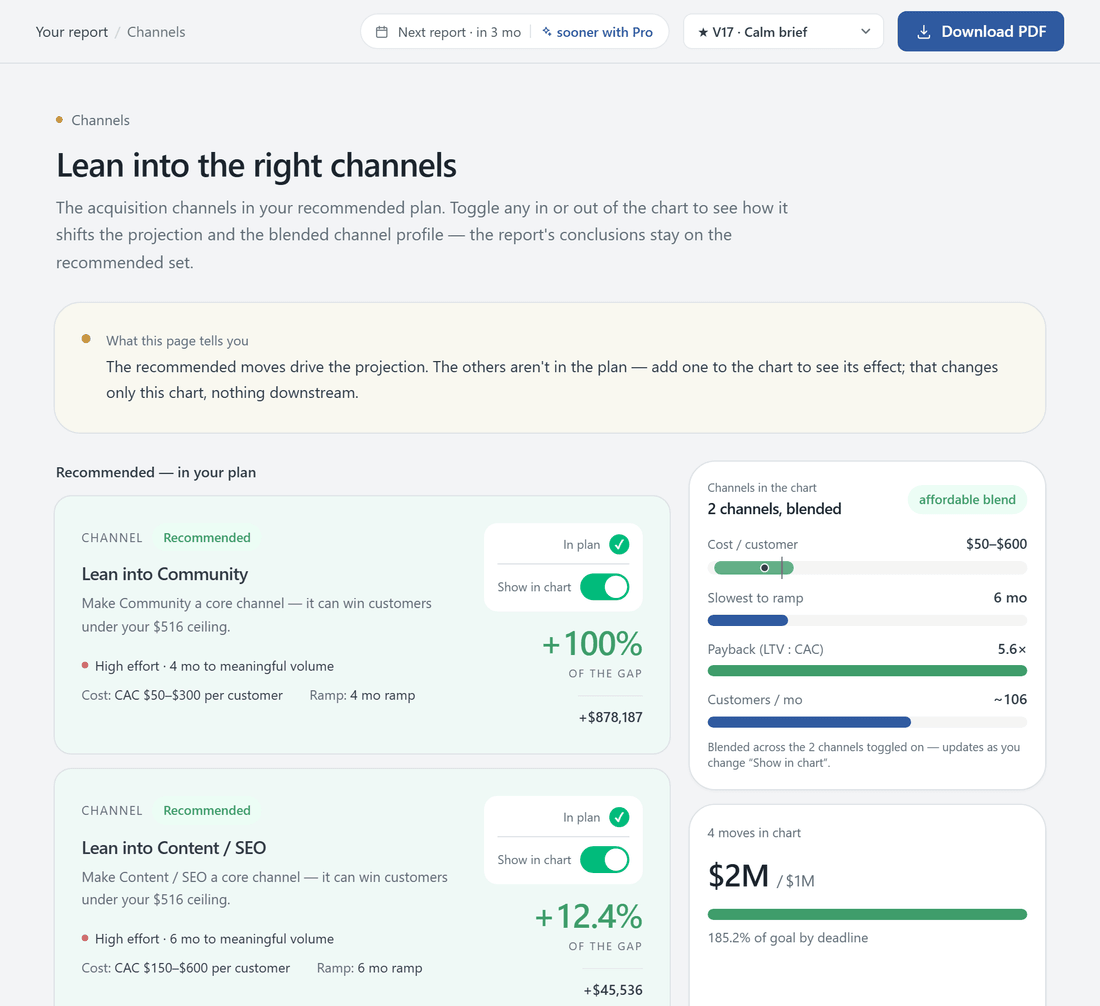
Where the money goes and what it returns
See which channels actually carry the plan and which only spend the budget. Take one out and watch the projection move.
See the channel read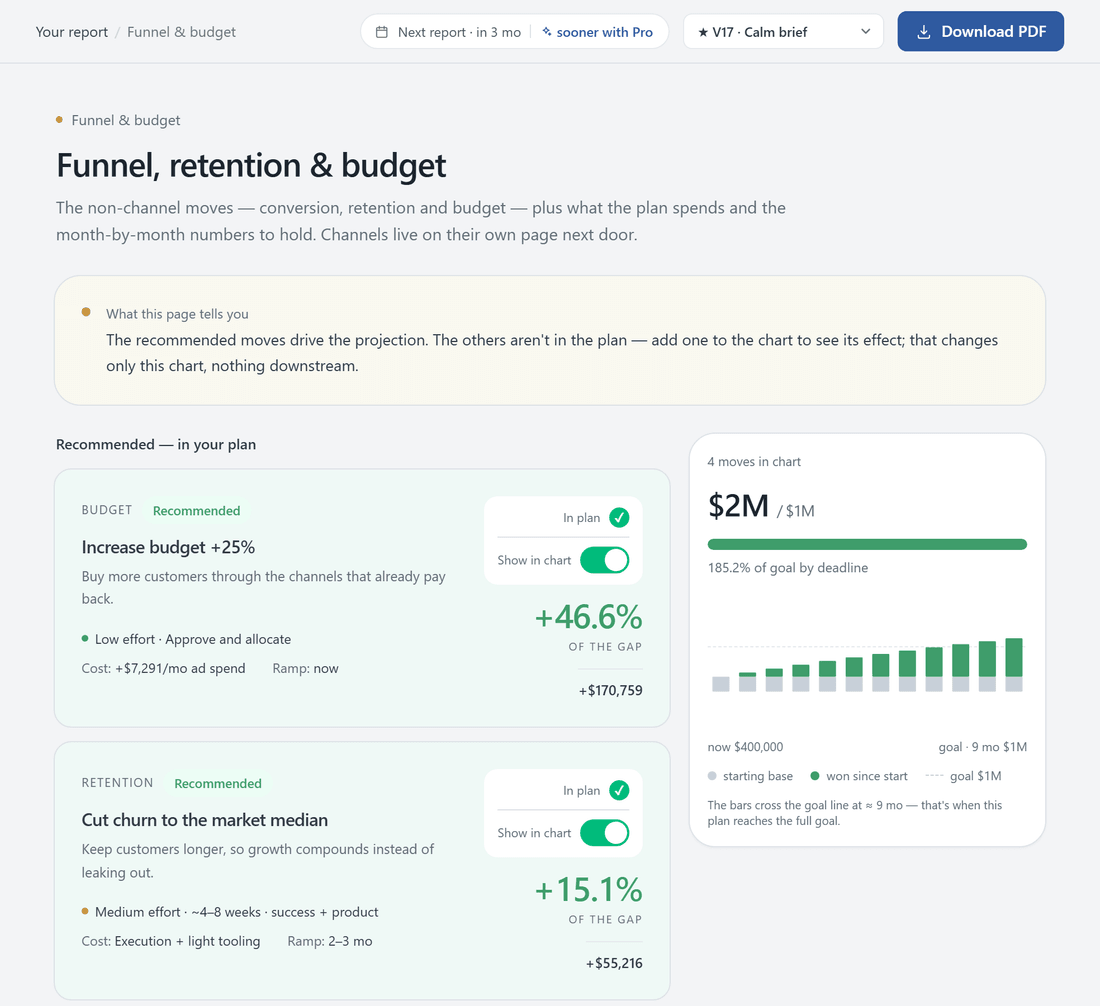
Where the plan starts to come apart
Conversion, retention and money in one picture — with the month-by-month figures you have to hold to arrive.
See the funnel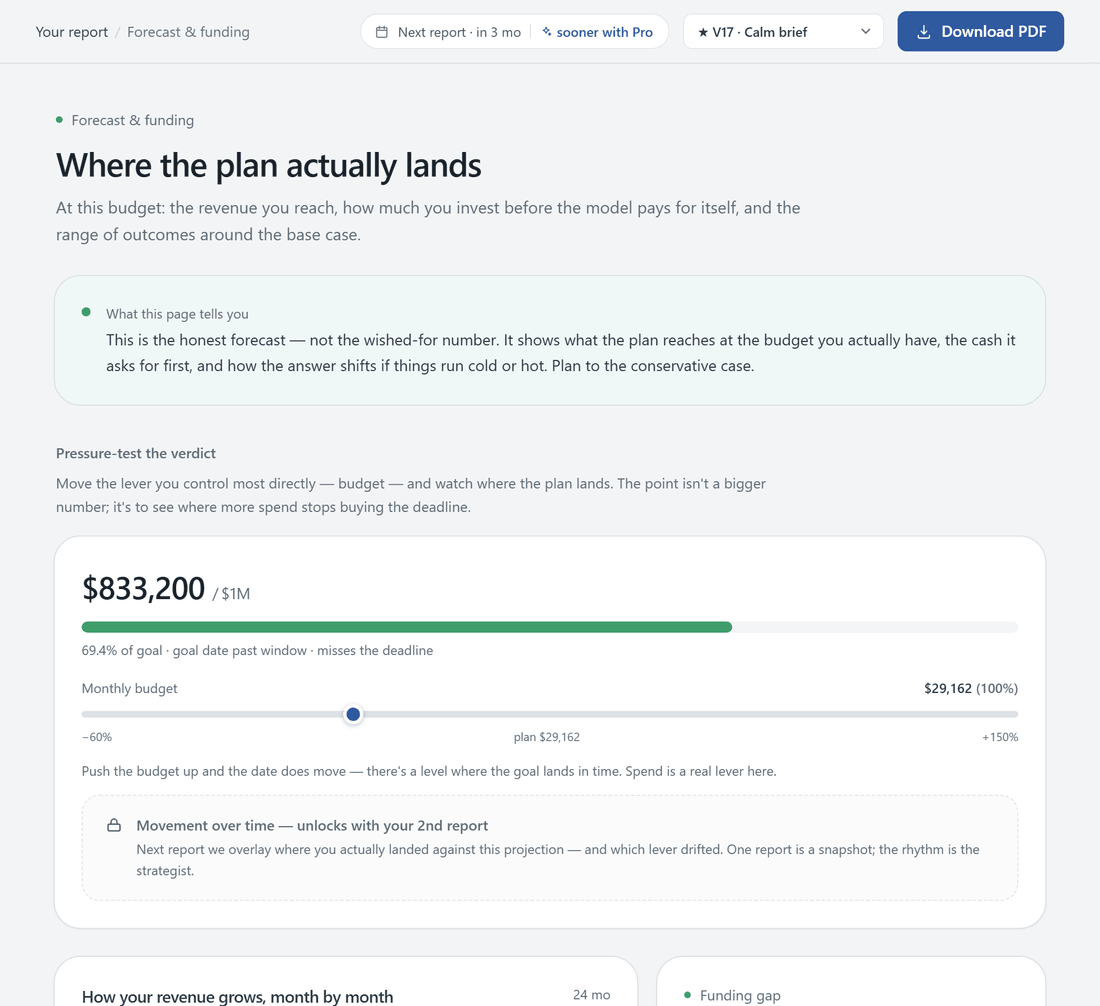
Where the plan actually lands
The honest projection, not the wished-for one: what this budget reaches, what it misses by, and what moves the date.
See the forecast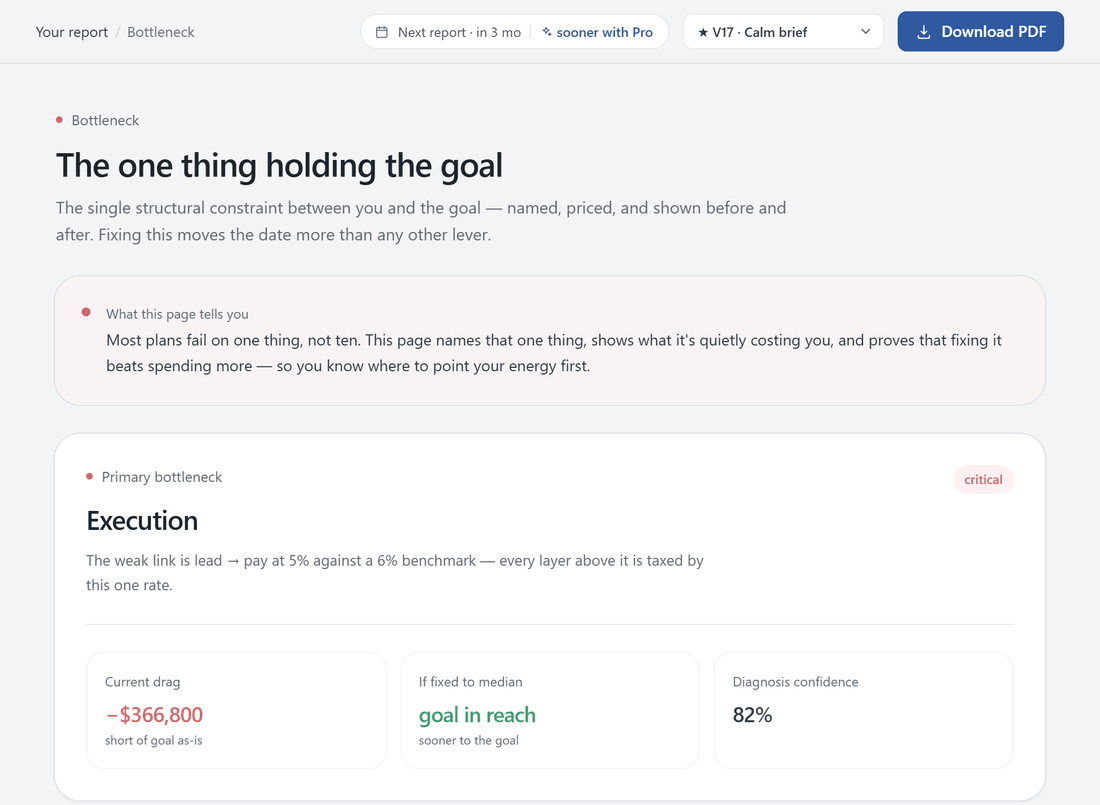
The one constraint holding everything
Not a list of problems — the single lever that shifts the date. The rest is noise, and we say so.
Find the bottleneck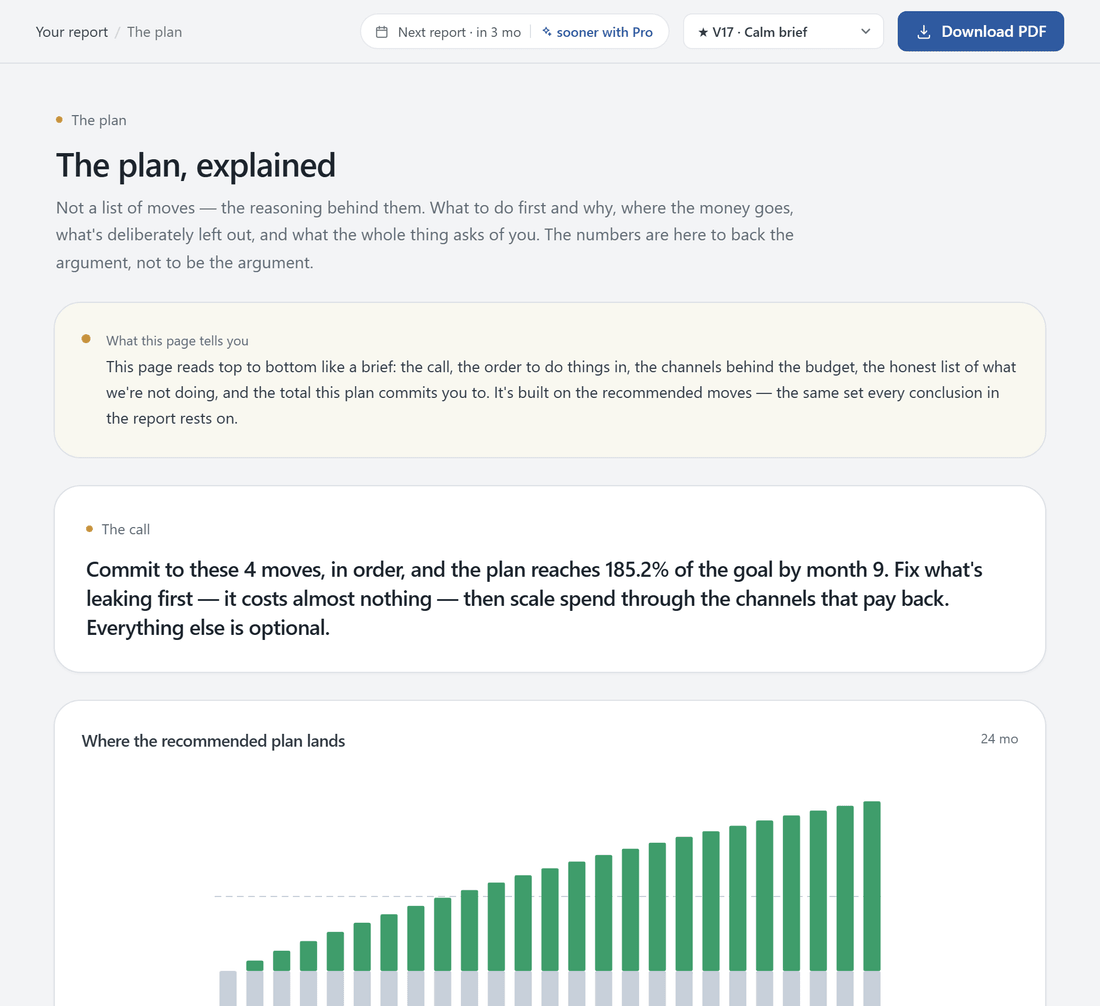
What to do on Monday
Named moves with an expected effect and a price, ordered by impact. No 'improve conversion'.
See the planWe don't guess — we check
Most growth plans do not fail because the ambition was too large. They fail because nobody reconciled the number with the arithmetic underneath it.
Veritess brings three things together: your own figures — revenue, what a customer pays, your conversion rates; market benchmarks — so you can see where the plan quietly bets above the median; and the arithmetic of the decomposition — how many customers, leads and visits each month the number actually requires.
The verdict sits where all three agree. If the goal does not close, we say so plainly and show what is holding it, instead of suggesting you try harder.
verdict
Goal → Decomposition → Verdict → Plan
Four steps, no integrator, and no 'first connect your data'.
Goal
- What you want to earn, and by when
- Where you are now — revenue, price per customer, conversion, cost per click
- Six questions, no account, nothing to connect
Decomposition
- How many new customers it takes — in total and every month
- What that means in leads and traffic at your conversion rates
- How much media budget that traffic costs in the first place
Verdict
- Whether the goal closes on today's numbers — yes or no
- What one customer costs against what they pay you in a year
- Where the plan bets above the market median, and what that costs the date
Plan
- Moves in order of impact, each with an expected effect and a price
- What the date does if you shift one lever instead of all of them
- A report you can put in front of a founder or an investor
Six questions. One honest answer.
The same engine as the report, running in this page. No account, nothing saved.
What revenue do you want in 12 months?
Annual, not monthly.
How it works
Watch the demo →Nothing to connect
Six answers and the report exists. No integrations, no engineers, no week of onboarding.
Numbers, not vibes
The whole decomposition is open: you can see where every figure came from and what changes if an input moves.
Checked against benchmarks
Your rates are set against the market's, so you can see where the plan quietly assumes the best case.
A report, not a screen
What you get is a document — verdict, constraint and plan — built to be shown to other people.
One goal, one arithmetic, one report.
The report
Verdict, bottleneck, channels, funnel, forecast and plan — as sections, each led by its own conclusion.
Simulation
Move a lever, see what happened to the date and the budget. Not a separate calculator — the same decomposition.
Re-report
The next report lands on top of the last one: where you actually got to, and which lever drifted.
Want to know whether your goal holds?
Six questions, two minutes. No account — the verdict shows up straight away.